ServicesRoof Replacement
Roof Replacement in Northridge, OH
If patches on your roof no longer pay off, we strip it to the deck and build a new system up to the ridge. First, we lay out how each material stacks up on price, lifespan and upkeep, so your choice still holds up years from now.
A new roof should be worth what you paid for it
A roof replacement is one of the larger checks you will write for your home, and the cheapest bid is not always the cheapest roof. A shingle that costs a little less today but wears out years sooner can end up costing more per year of protection. We put those numbers side by side in plain terms and let you decide.
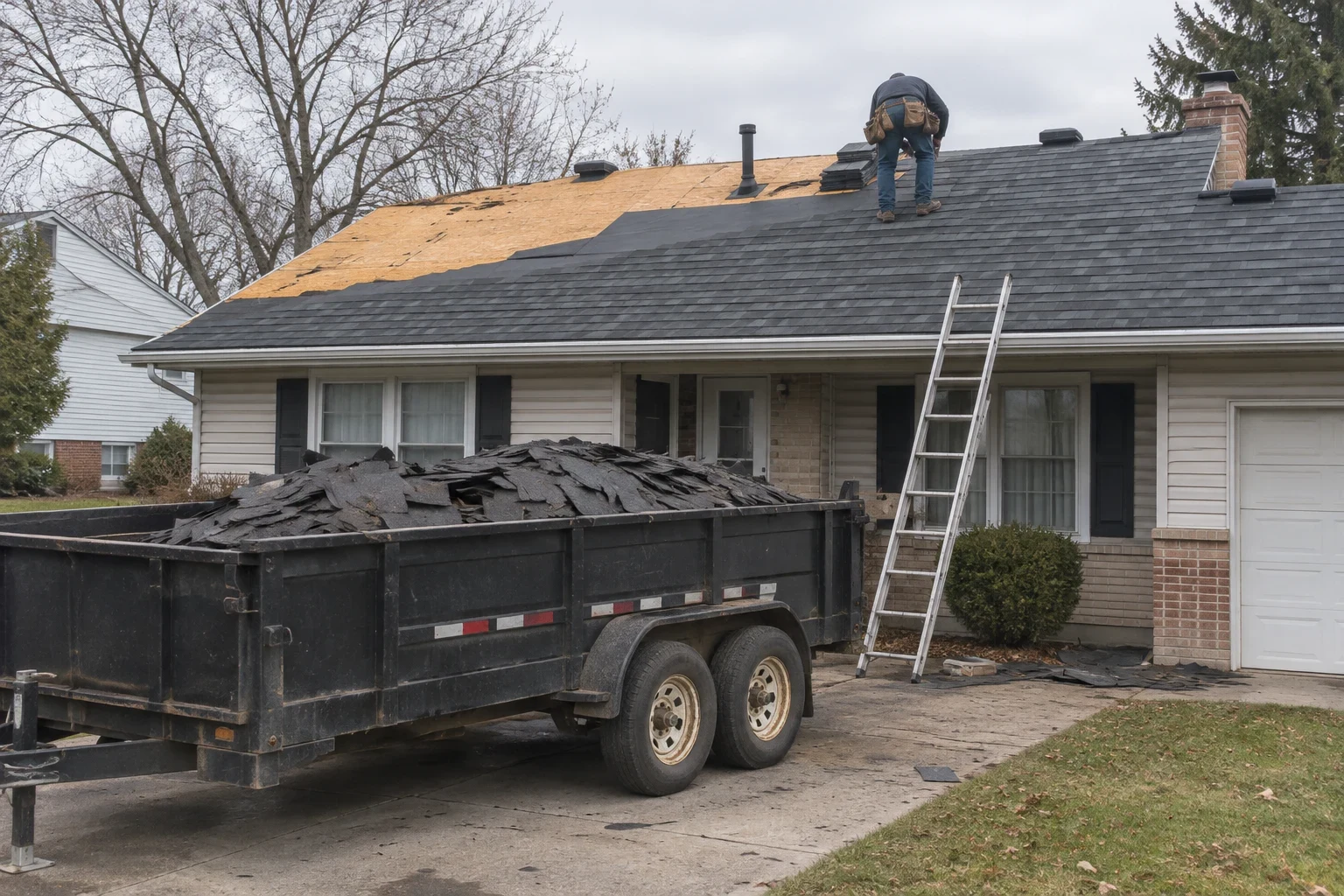
We tear off the old roof down to the decking, fix what we find underneath and build the new system the way it is meant to go together: underlayment, flashing, ventilation and shingles working as one. Ohio winters are hard on shortcuts, especially at the eaves where ice tends to back up, so that is where we take the most care.
If your roof still has good years left, we will tell you. Sometimes a targeted roof repair is the better use of your money, and we would rather earn your trust than sell a roof you do not need yet.
What your roof replacement includes
Tear-off down to the wood
Old shingles and underlayment come off completely, which lets us check every sheet of decking. Boards that are soft, rotted or delaminating are swapped out before the new layers start, and you get pictures of each problem spot.
Ice and water barrier at the eaves
Along the eaves and through the valleys we lay a self-sealing membrane, since that is where snowmelt refreezes and backs water under shingles. Synthetic underlayment covers the remaining deck.
New flashing and drip edge
We install new metal around chimneys, sidewalls, vents and skylights rather than reusing the old pieces. A drip edge runs along the roof edges to steer water past the fascia and into the gutters.
Balanced attic ventilation
We measure soffit intake against ridge exhaust and fix any imbalance. Steady airflow through the attic extends shingle life and reduces ice dams in winter and heat buildup in summer.
Shingles and ridge cap
Pick your material and color once you have seen how each option wears over time. We follow the manufacturer's installation rules so the lifetime material warranties stay in force.
Cleanup and nail sweep
Tarps cover your plants and beds while we work, and debris is hauled away as we go. On the last day the crew rolls a magnet across the grass, beds and driveway so stray nails end up in our bucket instead of your tires.
Signs it may be time for a new roof
Twenty years or more on the roof
That is about when many standard asphalt roofs begin to show their age. Age by itself does not mean replacement, but it is a good time for a close look.
Shingle grit in the gutters
Those granules shield shingles from the sun. When heavy amounts start washing out of the downspouts, the shingles underneath harden and split much sooner.
Curling, cupping or cracked shingles
Edges that lift or cup let wind and rain slip beneath. Once that shows up across entire slopes, spot repairs cannot keep pace.
Repair bills keep coming
Several leak fixes in a year or two is a signal. That money might go further toward a new roof than toward one more patch.
A sagging roofline or light in the attic
A dip along the roofline or daylight showing through the boards suggests the decking or framing needs attention before long.
How a replacement goes, start to finish
- 1
A close look and a fair comparison
We start on the roof and in the attic, checking ventilation along the way. Then we go over materials with you, weighing price today against expected lifespan and upkeep, and hand you a written estimate broken out line by line.
- 2
Permit and a start date
When a permit is required, we take care of the paperwork and agree on a start date with you. Materials arrive shortly before the crew does.
- 3
Tear-off and deck repair
Before anything comes off, your yard and plantings are covered. The crew strips the roof and replaces damaged decking, stopping to show you anything surprising so we can decide on next steps together.
- 4
Building the new roof
The layers go on in sequence: underlayment, ice barrier, flashing, vents, then shingles. A typical home takes one to two days, with size and weather setting the pace.
- 5
Final walk and paperwork
After cleanup and the nail sweep, we walk the property with you and answer your questions. Your warranty details are handed over in writing.
What moves the price of a new roof
No two roofs are priced quite the same, so your written estimate lists every part of the job on its own line. You can see the tear-off, the decking, the materials and the labor separately, with nothing lumped together. We also show how each choice plays out over the years the roof protects your home, not only on the day it goes on. Here is what makes the biggest difference.
- Size and slope
- A bigger roof needs more material and more hours of labor. Steeper pitches call for added safety equipment and slow the crew down.
- Shingle type
- Architectural, or dimensional, shingles carry a higher price tag than flat three-tab. They tend to outlast them and stand up better to wind, so spread over their lifespan they often cost less per year.
- What the decking looks like
- Damaged boards have to be replaced, and the full extent often is not clear until tear-off. Your estimate spells out how any added decking is priced, so there is no guessing later.
- Old layers and roof features
- Removing two old layers takes longer than removing one. Chimneys, skylights, valleys and dormers each need their own flashing work.
Roof replacement questions
Something not covered here? (937) 446-0539
Can new shingles go right over my old roof?
Some codes permit a second layer, but we rarely recommend it. It conceals decking trouble, adds weight to the framing and usually cuts the new shingles' life short. Tearing off costs more up front and tends to earn that back over time.
How many days will the work take?
For most homes, one to two days. Big or steep roofs, extra layers or heavy decking repair can stretch that out, and we do not install shingles in the rain.
What warranty comes with a new roof?
The materials we install come with lifetime material warranties from the manufacturer. Our installation work is separately covered by a 10-year workmanship warranty, so both the product and the labor are backed.
Should I plan to stay home that day?
You do not need to stay all day. We like a quick chat before the crew starts and a final look at the roof together once it is done. It gets loud indoors, so taking pictures off the walls and clearing attic shelves is a good idea.
What happens if something gets damaged while you work?
We carry coverage for that: our company is insured and bonded while the crew is on your roof. If anything on your property is harmed during the job, we tell you right away and talk through how it will be made right.
How can I tell if I truly need a new roof?
After we inspect, you get a straight answer. If a roof repair can give you several more good years, we will say so and lay out how that compares with replacing now.
Want to see your roof choices side by side?
Call and describe your roof. We'll book a time to see it and go over options that fit your home and what you want to spend.