ServicesGutters
Gutters in Northridge
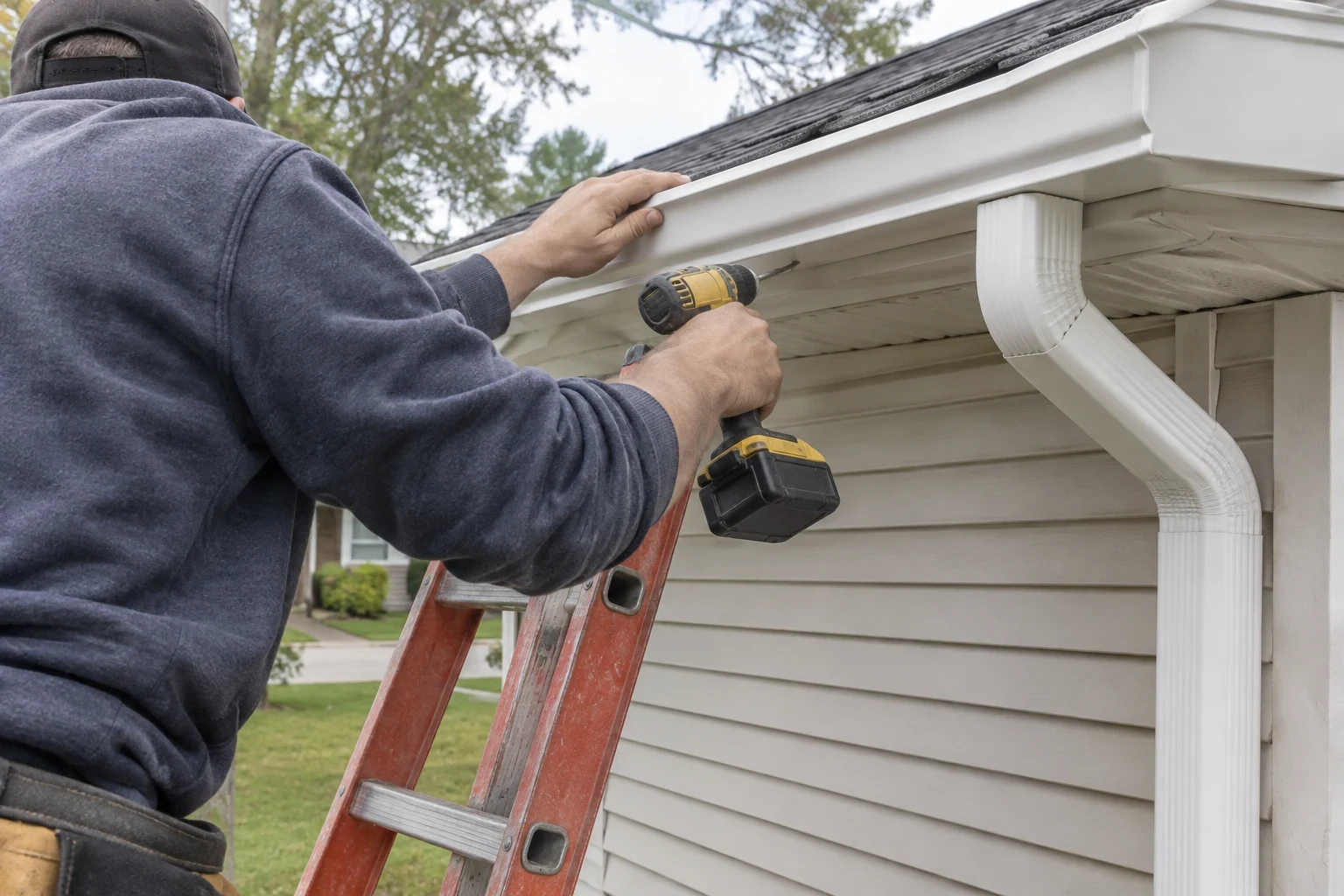
We install gutters and downspouts that are sized for your roof and pitched so water leaves the house instead of sitting in the trough. You get a clear comparison of options, what each costs now, and what each will ask of you in upkeep later.
Gutters Do Quiet Work Until They Stop
Every rain sends a lot of water off your roof, and gutters decide where it ends up. Working well, they move it away from the foundation before it can soak in. Once they sag, clog or start leaking at the joints, that water drops onto fascia boards, splashes up the walls and collects along the basement. Because the harm builds slowly, it tends to catch people off guard.
We install new gutter systems and replace tired ones for homeowners in Northridge and nearby towns like Springfield and New Carlisle. Before you pick anything, we lay out the trade-offs: lower-cost sectional gutters versus one-piece runs formed on site, standard 5-inch versus larger 6-inch troughs, and whether guards will really save you effort on your property. The aim is a system that spends a little more where it pays you back and nothing extra where it won't.
What Your Gutter Job Includes
- Sizing for your roof
- Before choosing a trough size, we look at roof area, pitch and where valleys concentrate runoff. A steep roof with a large valley often calls for a 6-inch gutter or a second downspout so it doesn't overflow in heavy rain.
- One-piece gutters formed on site
- We roll each run from aluminum coil right at your home, so it comes off the machine as a single length. The only joints are at corners, which leaves far fewer spots that can drip or need resealing later.
- Correct pitch and hidden hangers
- Every run slopes gently toward its downspout so water doesn't sit and freeze. Hidden hangers go in close together to hold up under soggy leaves and winter ice.
- Downspouts that carry water away
- We put downspouts where they drain best, not just where they are easiest to mount, and add extensions so water empties well clear of the foundation.
- Checking the wood behind it
- Taking the old gutters down is when soft fascia comes to light. If we find rot, we show you photos and go over your options, including our soffit and fascia work, before anything gets added.
- Haul-away and cleanup
- We load up the old gutters, spikes and scrap, then sweep the beds and driveway for stray screws and metal shavings.
Signs Your Gutters Need Attention
Overflow during steady rain
When rain pours over the outer lip instead of running to the downspout, the gutter is clogged, undersized or sloped the wrong way. Each of those drops water right beside your foundation.
Sagging or pulling away
A gutter that dips between hangers or tilts away from the eave usually has loose spikes or soft wood behind it. Winter ice and wet leaves make it worse each year.
Drips at seams and corners
Sectional gutters start leaking where the pieces meet as the sealant ages. A couple of drips can be resealed, but leaks at nearly every joint usually mean the system is close to worn out.
Peeling paint or stains below
Streaks down the walls, flaking paint on the fascia or a trench washed into the mulch under the eave all show water getting loose where it shouldn't.
Damp basement after storms
Downspouts that empty right against the wall let water work its way inside. Moving or extending them is often one of the least expensive fixes around.
What Drives the Cost of New Gutters
Most of a gutter price is set by how many feet you need and how easy the eaves are to reach. We measure before giving a number, and along the way we show you where spending a bit more now saves on cleanings and repairs down the road.
Total footage
More eave length means more metal and more labor, and each corner is another piece to cut, fit and seal. Bump-outs, dormers and several roof levels add work compared with a simple rectangular house.
Gutter size and metal
Six-inch troughs and heavier aluminum cost more than standard 5-inch gutters. They carry more water off large roofs, stand up to ice better and usually need fewer repairs.
Reach and footing
Second-story eaves, sloped yards and dense shrubs along the walls call for more ladder setup and slower work. A single-story ranch with open ground around it goes faster.
State of the fascia
Gutters have to hang on solid wood, so rotted boards get replaced first. We photograph what turns up and you decide how to proceed.
Guards
Guards raise the upfront cost. Beneath big trees they can cut out most cleanings, but on an open lot they rarely earn back their price, and we'll tell you honestly which fits your yard.
How a Gutter Install Day Goes
- 1
We talk it through by phone
You describe what you're noticing and we pick a time to stop by. On the visit we measure each stretch of eave, look over the boards behind the old gutters and see where puddles form around the house.
- 2
You get options side by side
Your written estimate spells out sizes, materials, downspout count and any guards, line by line. We point out which choices pay off over the years on your home and which ones you can leave out.
- 3
Old gutters come down
On install day we take off the old system and inspect the wood it was attached to. Most homes are finished in one day, and you don't need to be there or move anything besides cars parked near the drive.
- 4
New system goes up and gets tested
We form the gutters on site, hang them at the right slope and connect the downspouts. Then we flush water through every section to make sure it drains before we tidy the yard and head out.
Gutter Questions We Hear Often
Are one-piece gutters worth more than sectional ones?
For most homes, yes. Sectional gutters cost less to buy, but each joint is a spot where sealant dries out and starts to drip. One-piece gutters formed on site only join at the corners and downspouts, so there is far less to reseal over the years.
Do I need gutter guards?
That comes down to what grows near your roof. When large trees drop leaves and seeds onto the shingles every fall, guards can spare you several trips up the ladder each year. On an open yard, a cleaning now and then usually costs less, and we'll tell you that plainly.
What warranty comes with new gutters?
The gutter materials we install come with lifetime material warranties, and our labor is covered by our 10-year workmanship warranty. If a corner we sealed or a hanger we set fails during that time, we return and fix it.
Can you just fix my existing gutters?
Often, yes. Resealing a corner, refastening a loose stretch or adding a downspout costs much less than a full system. When the metal is dented and thin or leaks show up all along the run, replacing it tends to cost less over the next ten years than patching it again and again.
My roof is getting old. Is it smart to wait on new gutters?
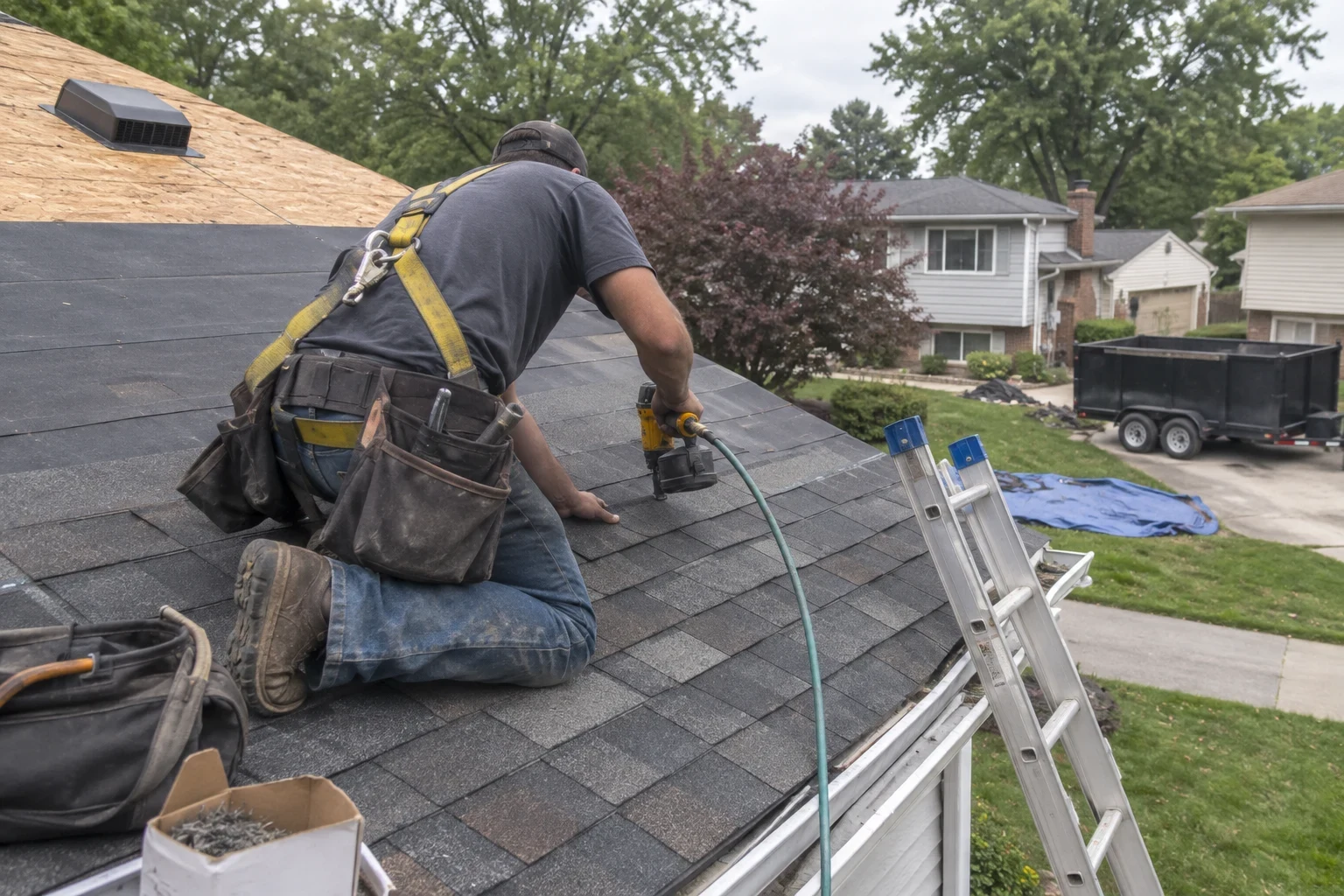
If a roof replacement is likely in the next few years, it usually pays to plan the two together. The gutters often have to come off while the roofers put in drip edge, and doing everything in one project means that removal and rehanging happens only once. We can look at both on the same visit and help you decide on timing.
What happens if something gets damaged while you're working?
Our company is insured and bonded, so you are covered if an accident happens while our crew is on ladders around your home. We also lay out tarps and work carefully around plantings to keep that from happening in the first place.
Ready to Stop Water Where It Starts
Tell us what your gutters are doing and we'll set up a visit to measure and look. You'll get a written estimate that compares options on cost now and upkeep later.